Oubaku Baisa-ryu | 黄檗売茶流
Our school finds its heart in the story of Baisao (The Old Tea Seller), an 18th-century monk who left the monastery to sell tea on the streets of Kyoto. He did not seek profit or prestige; he sought to share a "cup of awakening" with anyone, regardless of their rank.
To study Oubaku Baisa-ryu is to inherit this spirit of freedom and sincerity. We believe that tea is not a performance, but a way to cherish each other's hearts through a single, shared moment.
Roots in Zen
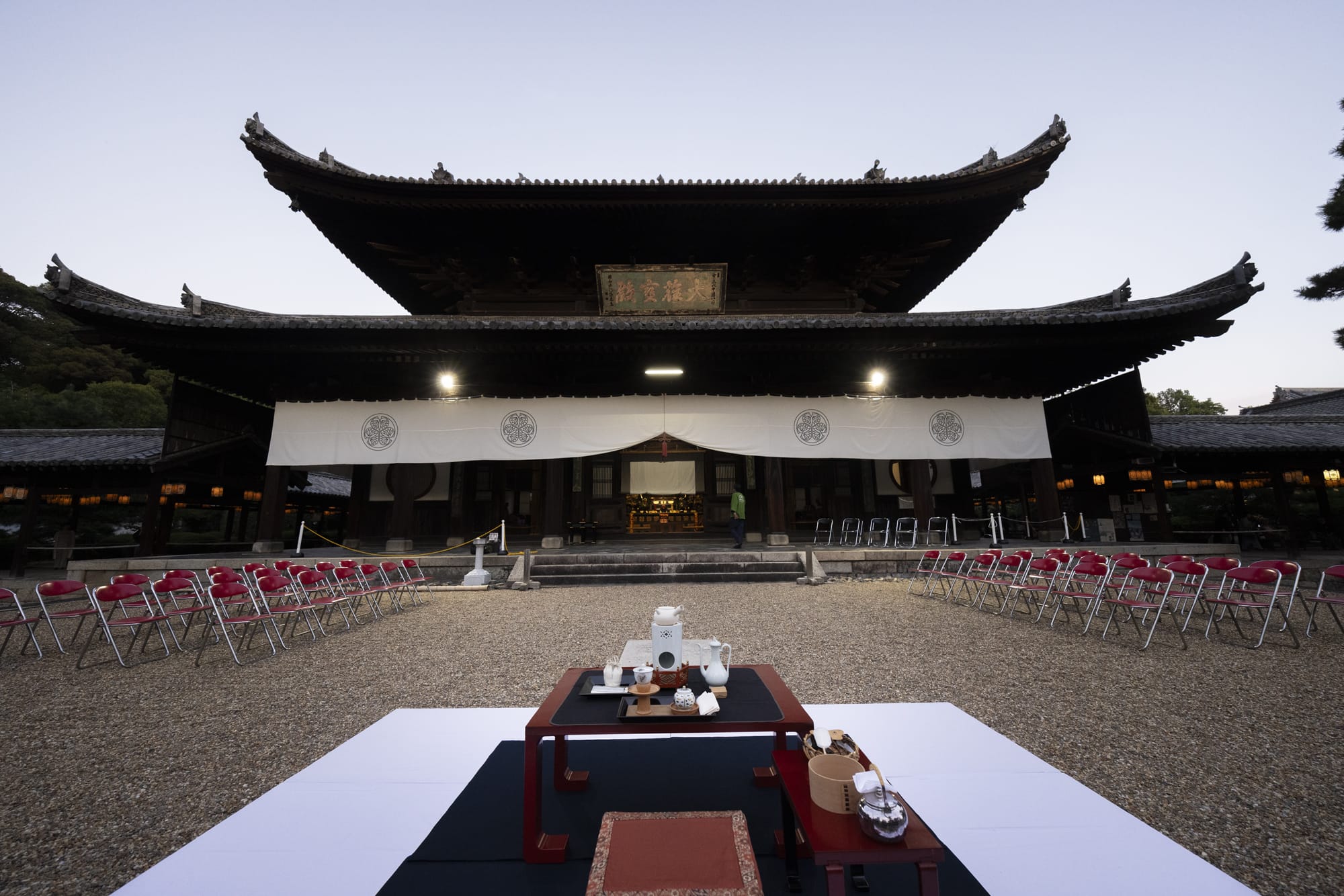
The school’s origins are tied to the tea rituals (charei) of Obaku-san Manpuku-ji, the head temple of the Oubaku Zen sect in Uji, Kyoto. While our movements are precise and beautiful, they are rooted in the "quiet discipline" of Zen practice.
In our tea room, we practice with tables and chairs or Ryurei-shiki (立礼式). This is a deliberate choice made by our Grand Master to ensure that tea remains accessible to everyone, everywhere, regardless of physical ability or cultural background.
O-temae お手前
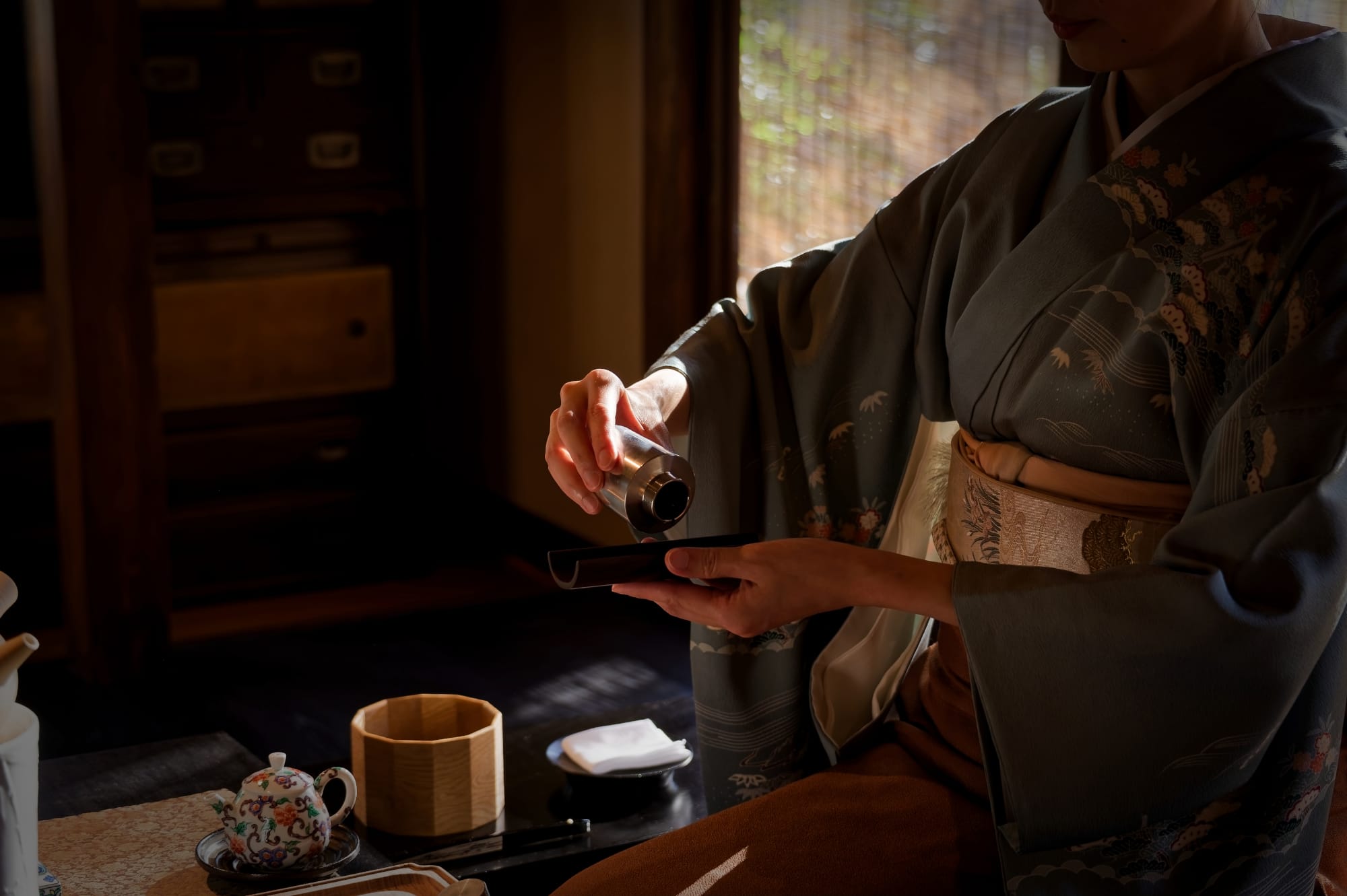
The ritual of preparing tea, known as O-temae, is more than a set of steps. It is a shared aesthetic.
- Refinement: Through repeating the same movements, we refine our own character.
- Presence: We focus on the tools and the water to return to the "now."
- Diversity: While the form is the same, every practitioner brings their own unique "breath" to the tea.
A Modern Practice
We believe that the beauty cultivated in the tea room has the power to change how we see the world outside of it. By practicing Oubaku Baisa-ryu, we learn to bring intentionality and "Visual Silence" into our everyday lives.
Schedule a trial lesson to learn more and experience Oubaku Baisa-ryu Senchadō firsthand!