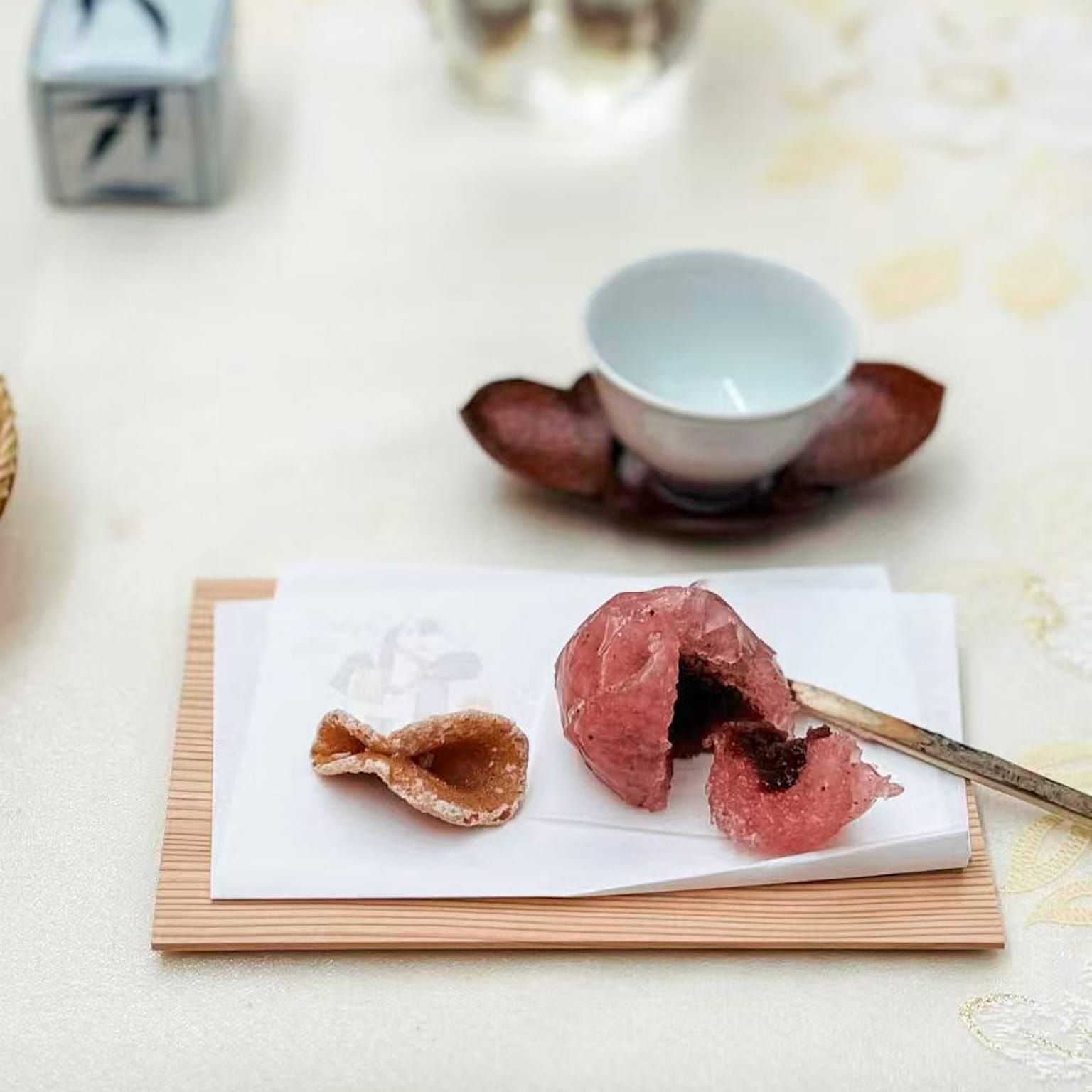
Planning a gathering sounds simple, but there is so much to consider. Selecting the tea, the sweets, and the various wares all come down to a single theme: intention. This is a lesson deeply rooted in both Sadō and Senchadō. For this transition into spring, the chosen withered Sencha with sweet, floral notes, was paired alongside a Sakura sweet, 花すだれ from Kyoto Kogetsu. The table featured a kekkai (the boundary piece) made of ceramic bamboo, created by my ceramic teacher. Small flowers were placed around the bamboo to bring a sense of nature in.
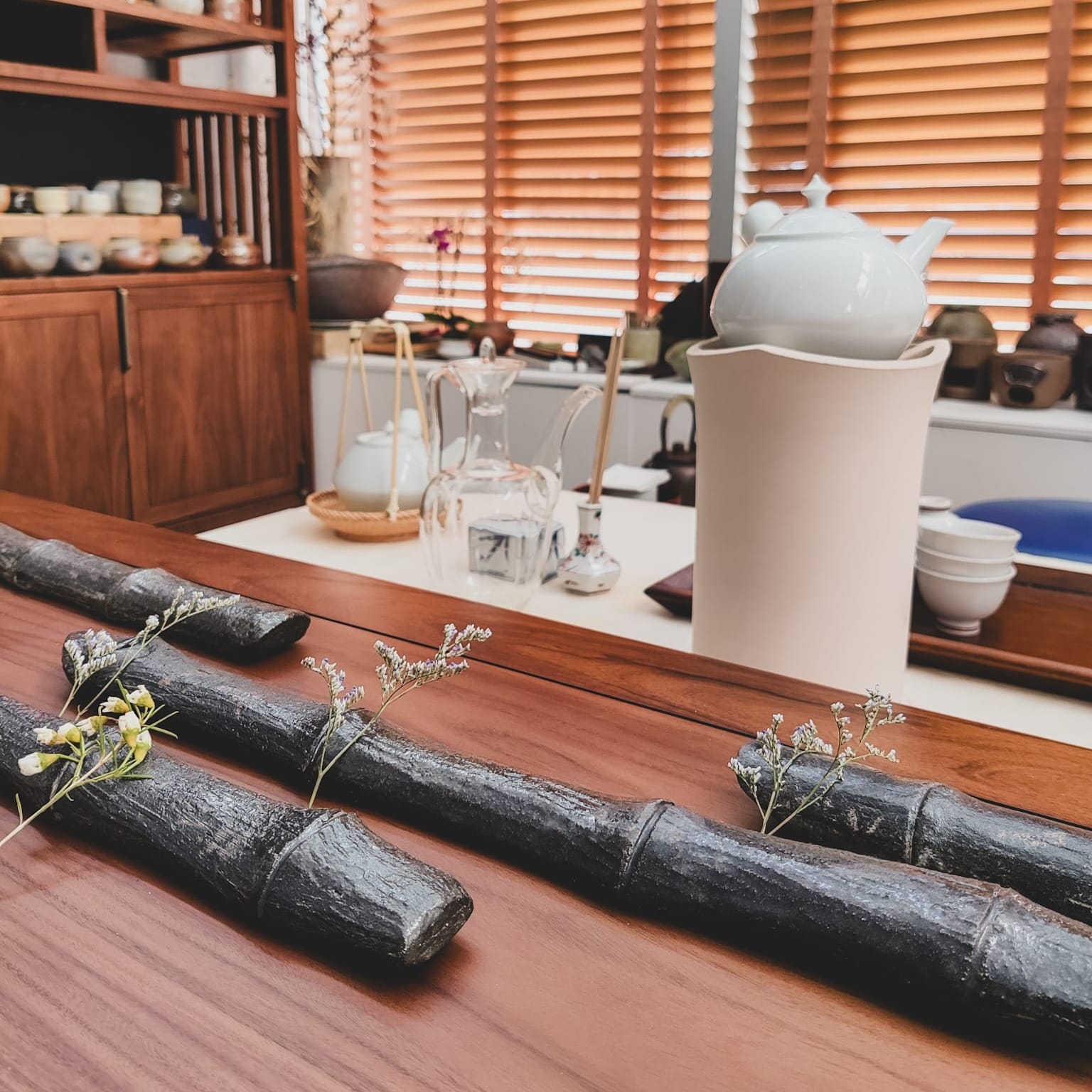
The five guests created a harmonic presence in the tea room. It was a significant milestone to have both my Sadō sensei and my ceramics teacher present, adding a quiet gravity to the session.
Although guests were invited to talk during the tea preparation, the room remained completely silent. For many, it was a first experience with Senchadō, and the silence only broke after the first cup was served. My Sadō sensei mentioned being captivated by the movements of the service, which guests described as fluid and intentional. There were no "wasted" or unnecessary motions. While there are similarities to Sadō, the specific rhythm of Senchadō offered something entirely new.
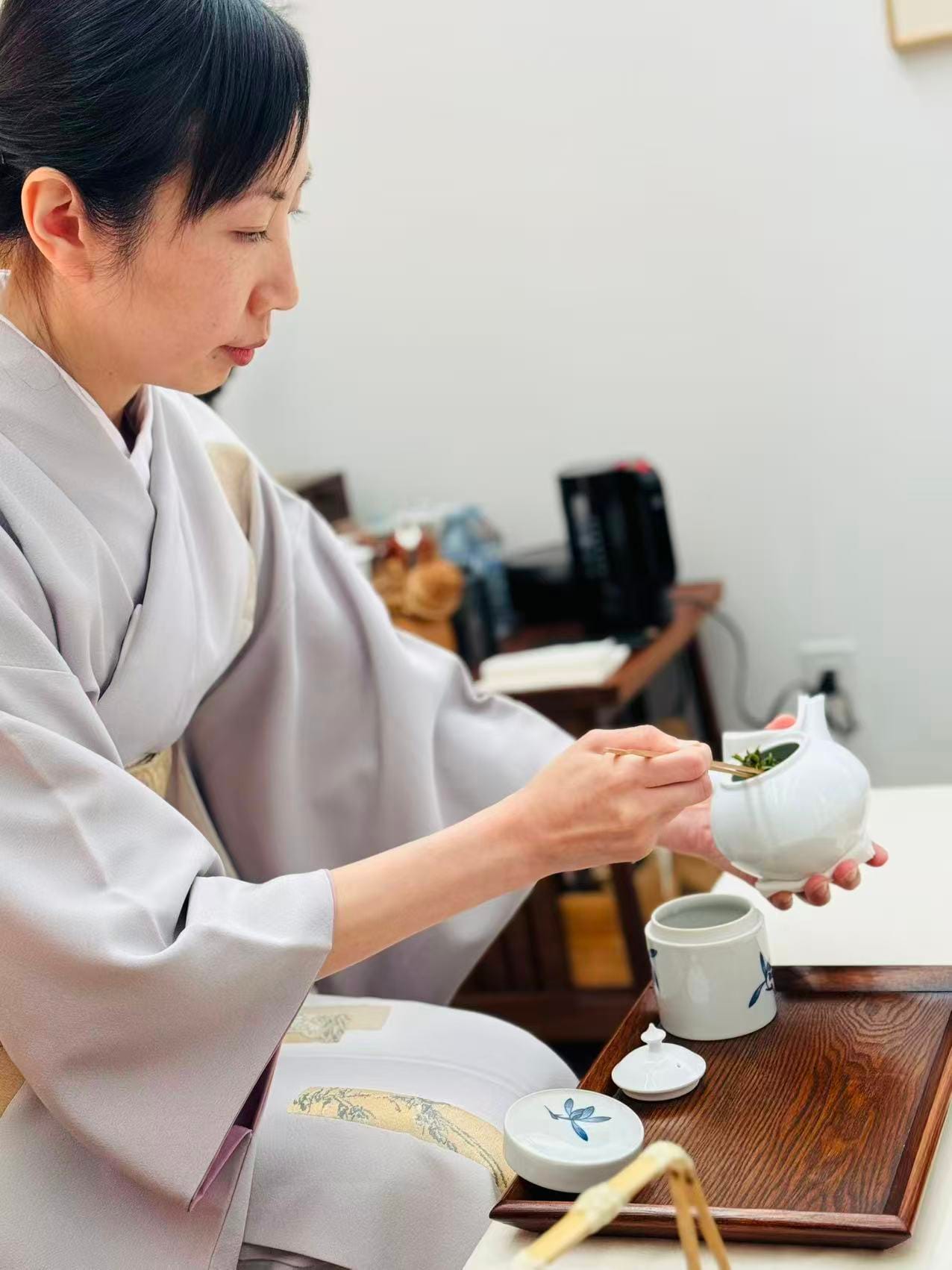
Leading with intention is the heart of the Way of Sencha. It is a way to practice being present through ritual. For those who enjoyed the atmosphere of this gathering and want to explore the practice itself, trial lessons are now available in Vancouver.
Senchadō (煎茶道), or the Way of Sencha, is a lesser-known Japanese tea ceremony that uses loose-leaf tea instead of matcha.
Spring Equinox Tea Gathering | 春分の煎茶会
Five days before the Spring Equinox, the first official Senchadō gathering took place in Vancouver. Outside, the plum blossoms were already out, and the first cherry blossoms had just started to appear.