While the outward details were captured in my last post, lately my mind has been lingering on the "back of house" shifts that happened behind the tea table.
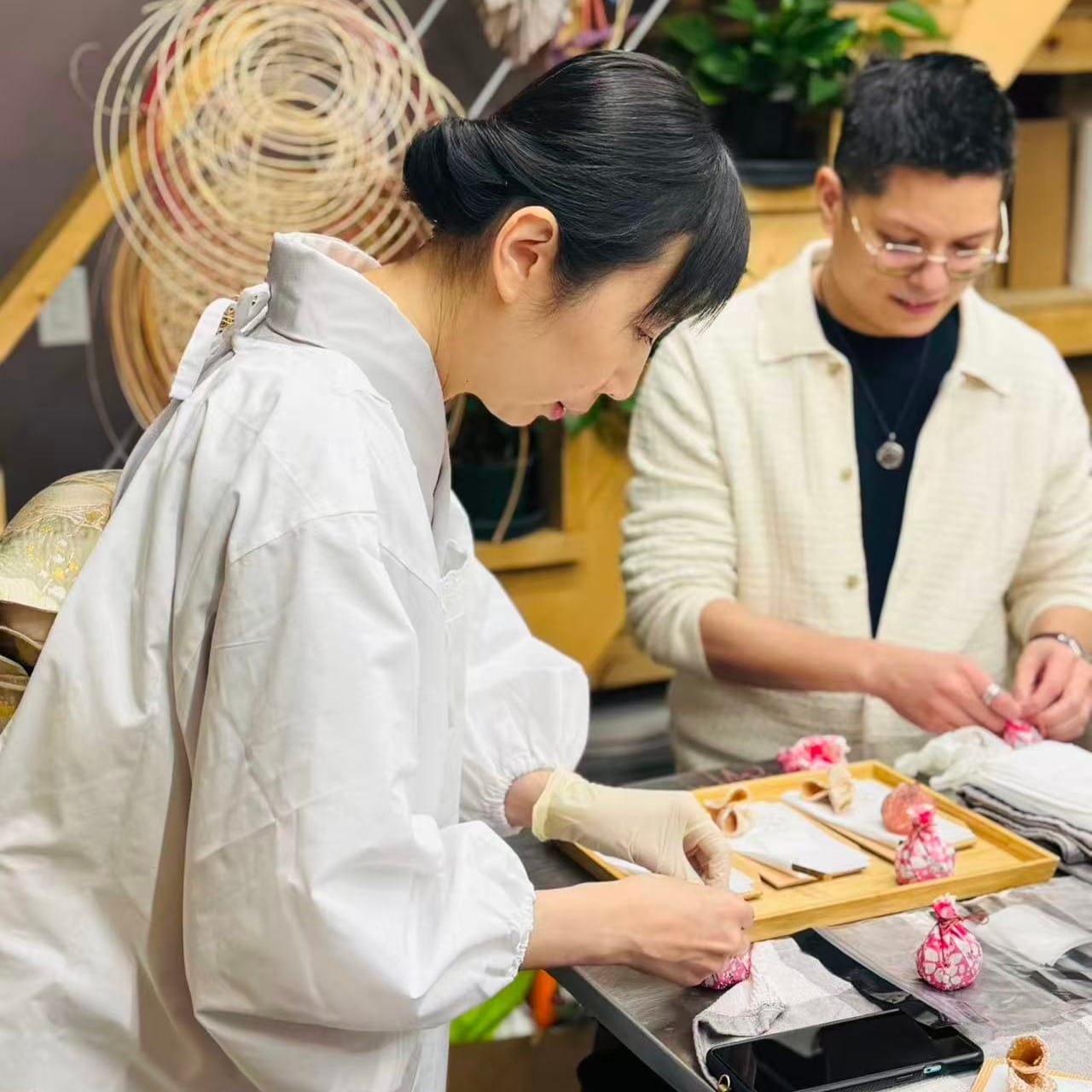
The weight of years of training felt very real before the guests even arrived. Much of my time at Sadō tea gathering or demonstrations has been spent in the mizuya, the preparation area behind the tea room. It was there that the invisible discipline of tea took root: the importance of timing and the tiny details that ensure a gathering feels seamless. There was a quiet obsession with the small things, like the exact moment to soak the bamboo picks or the rhythm of plating the sweets. It might sound over the top to plan every second, but it brought a much-needed peace of mind at my own tea gathering. Perhaps, I was simply leaning into Rikyu’s rules for tea:
いづれも時は早めに (Izure mo toki wa hayame ni)
Be ready ahead of time.
降らずとも雨の用意 (Furazutomo ame no yōi)
Be prepared in case it should rain (even if it isn't).
That preparation became a safety net, clearing the way for a focus on being truly present as a host.
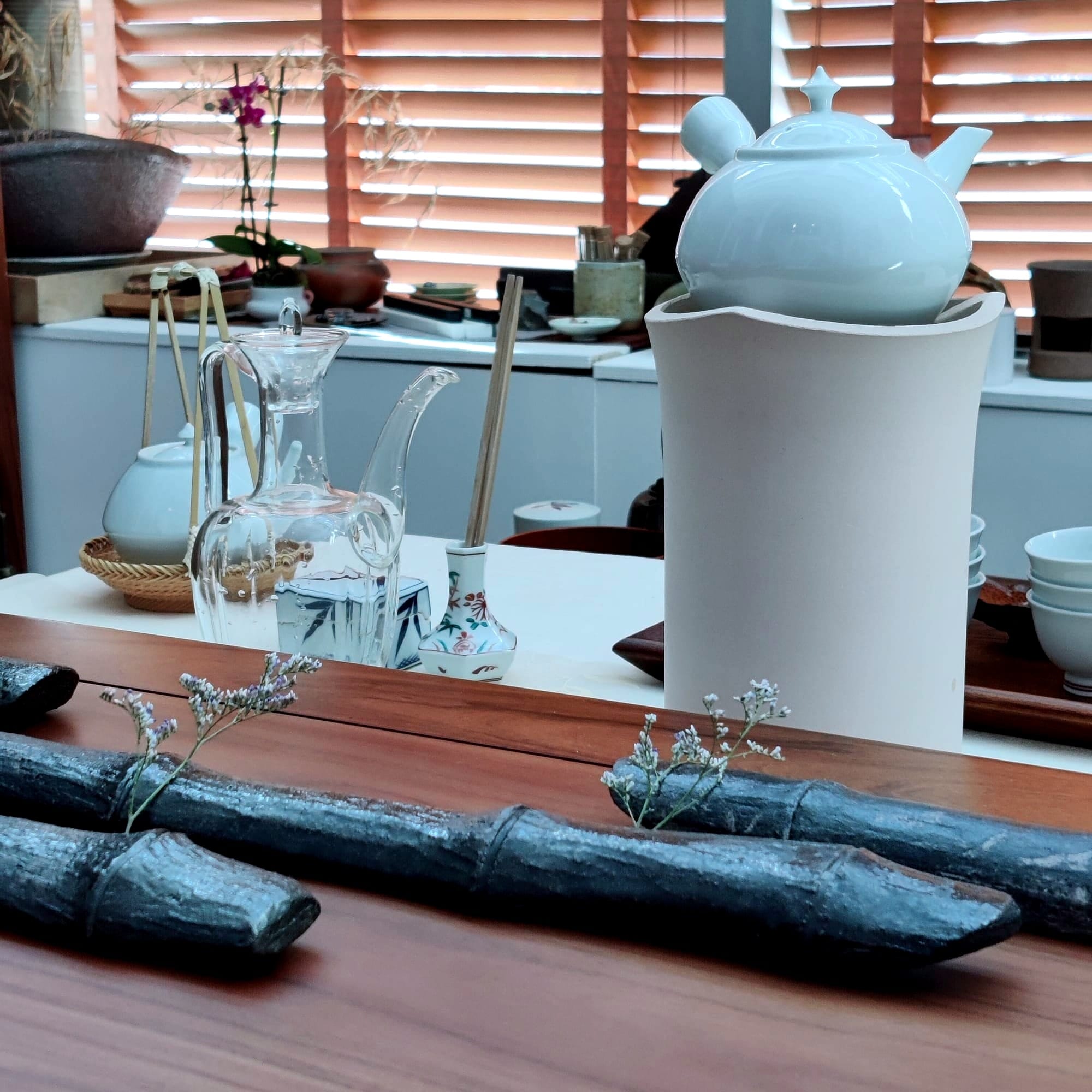
Once the ceremony began, the kekkai took on a role far beyond decoration. To most people, the boundary marker might seem like just a decorative piece that is "simply there." Using ceramic bamboo pieces crafted by my pottery teacher changed the energy of the space and provided comfort. Even with guests only an arm’s length away, the kekkai carved out a sanctuary. On my side of the bamboo, a sense of calm and control took over. The boundary wasn't a wall to keep people out; instead, it acted as a frame that allowed for total focus on the person being served.
I had expected, almost wished, that guests might fill the room with small talk to help settle the nerves of a first-time host. Even with an invitation to speak during the temae, a heavy, collective silence settled over everyone the moment the tea preparation began. It was startling at first, and the urge to break the tension with conversation was strong. Yet, resisting that urge and simply breathing into the movements allowed a new rhythm to emerge. Gradually, the silence stopped feeling like a weight and started feeling like a gift. It became the perfect narrator for the tea.
Not everything went exactly as rehearsed, of course. A welcome speech practiced dozens of times didn't quite flow with the planned perfection, and there was a fleeting wish to have been more thorough. But looking back, there is a certain beauty in what was left unsaid. Without a long lecture, the guests were free to have their own unfiltered encounter with the experience. It was a good reminder that in tea, and perhaps in life too, the most important things are often found in the space between the words we planned to say.
If you're interested in joining a tea gathering, please join the invitation list below.
Preparation, Boundary & Silence
The first official Senchadō gathering has come and gone, but the echoes of that afternoon are still settling. These are the small, internal moments that shaped the spirit of the room.